Video Diagnosis of Boiler Faults Before Sending an Engineer (UK)
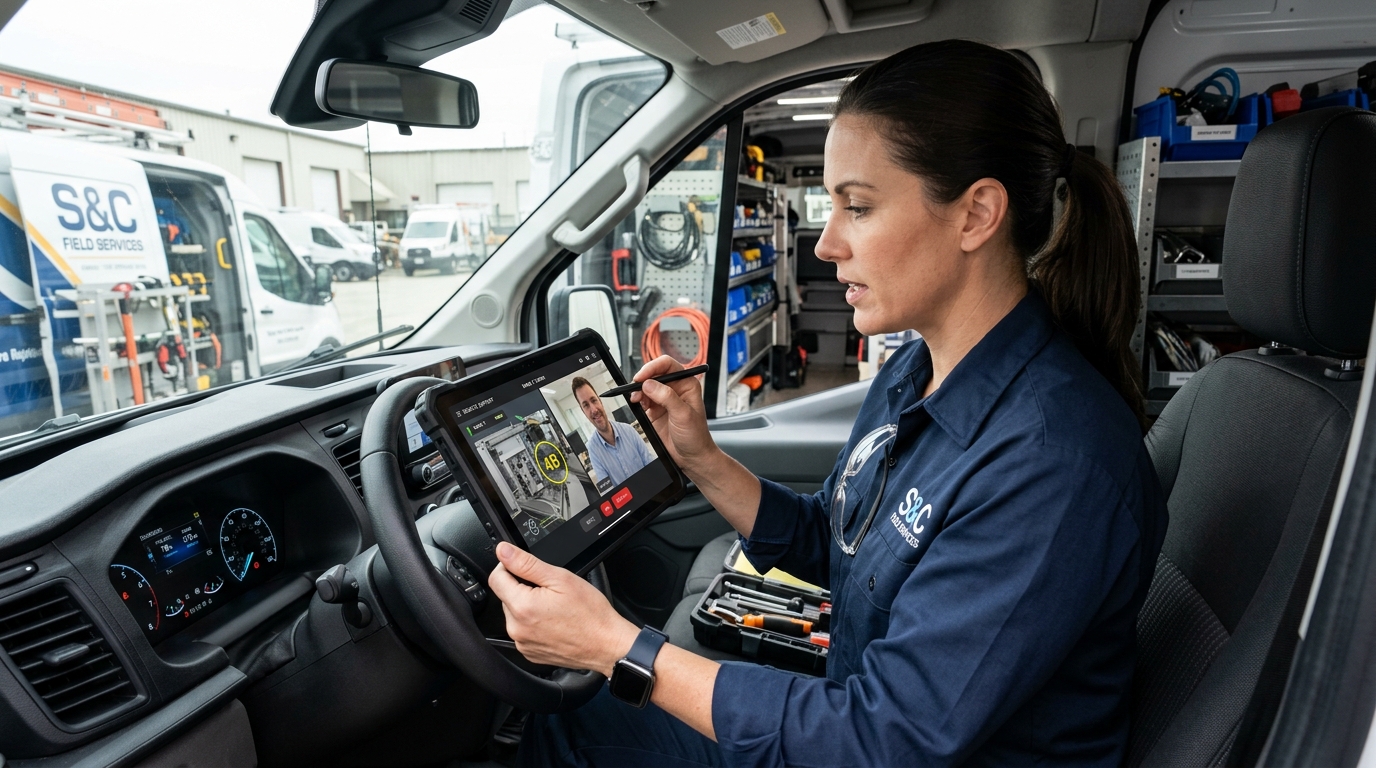
Yes. A short live video call lets a heating engineer or repairs coordinator see the boiler’s display, pressure gauge, fault code and pipework before anyone travels. It confirms what the customer or tenant can safely check, tells you which skills and parts the visit needs, and separates genuine emergencies from jobs that can wait.
What video diagnosis can and can’t do for a boiler fault
Most “no heating” calls arrive as a description: the boiler is “flashing”, “making a noise” or “just not working”. A phone conversation can’t tell you whether that means low pressure, a frozen condensate pipe, a lockout code, or a fault inside the appliance. A video call can show you, in a couple of minutes, what the customer is looking at.
The English Housing Survey 2024–25 found that 63% of homes in England had a condensing-combination boiler in 2024 and a further 19% had a condensing boiler. Most of these appliances have a digital display that shows fault codes, a pressure gauge on the front, and a condensate pipe running outside. All three are easy to point a phone camera at, and they answer most of the triage questions an engineer would otherwise ask on arrival.
What video can do:
- Read the make, model and fault code, so the right engineer goes with the right parts.
- Check the pressure gauge, thermostat setting and power to the boiler.
- See whether the condensate pipe is exposed to frost, or whether there is visible water leaking.
- Record what was seen, so the repair notes and the job history match what the tenant reported.
What video can’t do is work on the appliance. Diagnosis by video decides what happens next; it does not replace a Gas Safe registered engineer.
Gas safety lines video never crosses
The Health and Safety Executive is clear that anyone employed to work on gas appliances in domestic premises must be Gas Safe registered and competent in that type of gas work. A video call must never be used to talk a customer or tenant through opening the boiler casing, adjusting gas components or carrying out any work that needs a registered engineer.
Citizens Advice gives the household-side picture. Before calling an engineer, it suggests checking for a local power cut, that the boiler’s wall switch is on, that the thermostat is set correctly and, if the pressure is below 1 bar, following the manufacturer’s guide to repressurise. It also flags that the plastic condensate pipe can freeze in cold weather. If anyone smells gas or a carbon monoxide alarm sounds, the advice is to turn the boiler off and call the gas emergency number — a video call is not the right channel for that.
For renters, Citizens Advice says the landlord is responsible for repairing or replacing the boiler and that tenants shouldn’t try to fix it themselves. So for social and private landlords, the role of video is to let the repairs team see the problem, decide its urgency and dispatch accordingly. Whether a tenant is guided through a simple step such as repressurising is a matter for the landlord’s own policy.
Why it matters more for social landlords from 30 November 2026
Awaab’s Law Phase 1 came into force on 27 October 2025 for damp and mould and emergency hazards. GOV.UK guidance confirms that from 30 November 2026, Phase 2 extends the law to further hazards where they present a significant risk of harm — including excess cold and excess heat, alongside falls, structural collapse, fire and explosions, electrical hazards and domestic hygiene.
The government’s triage guidance uses boiler and heating failures as worked examples. In one scenario an elderly tenant reports in January that their boiler has stopped working and they can’t heat their home; the guidance says a reasonable landlord would categorise this as an emergency hazard. In another, a tenant with a heart condition has no heating anywhere in the home in February — again treated as an emergency. The guidance names older residents (65 or over) and children under five among those more affected by excess cold, and says the season alone should not set the urgency.
The timescales are tight:
- Emergency hazards: investigate and complete relevant safety work within 24 hours of becoming aware.
- Significant hazards: investigate within 10 working days, complete safety work within 5 working days of the investigation concluding, and issue a written summary within 3 working days of it concluding unless the works are already done.
Crucially, the Phase 2 guidance says standard investigations “may be conducted either remotely or in person”, and that emergency investigations can be conducted remotely. Photos or video may allow a remote investigation. If a tenant explicitly asks for an in-person investigation, the landlord must arrange one. Video triage of a boiler fault therefore fits the law as written — provided it is recorded properly and the tenant can still ask for a visit.
Landlords are already acting. Accent Group, a housing association, launched video-call repair support in December 2025, describing quick fixes such as repressurising a boiler as one use and more accurate diagnosis and better first-time fixes as the aim.
What to look at on the call: a triage checklist
A consistent checklist keeps calls short and makes the record useful later — for the engineer, for the written summary Awaab’s Law may require, and for any complaint.
| What to ask the caller to show | What it tells you | Typical next step |
|---|---|---|
| Boiler display and any fault code | The make, model and the fault category the manufacturer reports | Book the engineer with the likely parts; check the manufacturer’s code guide |
| Pressure gauge | Whether pressure is below about 1 bar (per Citizens Advice and the manufacturer’s guide) | Follow your policy on guided repressurising, or dispatch |
| Thermostat, timer and wall switch | Whether the boiler is being asked for heat and has power | Resolve on the call if it is a setting |
| Condensate pipe outside | Whether it is exposed and may have frozen in cold weather | Advise per your policy, or dispatch |
| Visible water under or around the boiler | A leak that may need urgent attendance | Raise priority; arrange a visit |
| The household and the room temperature | Vulnerability factors named in the Awaab’s Law guidance | Triage as emergency or significant; arrange temporary heating if needed |
| Any smell of gas or a CO alarm | A gas emergency, not a video triage case | End the call; caller turns the boiler off and calls the gas emergency number |
Choosing a video tool for heating repairs
There are three broad categories of tool, and they suit different jobs:
- App-based video tools ask the customer to download and install something first. That works for repeat users such as your own engineers, but it is a hurdle for a cold tenant with a broken boiler on a Sunday evening.
- Browser-based remote visual assistance lets the customer join from their phone’s browser, so the first call can happen straight away.
- Connected-boiler monitoring reads the appliance’s own data where the boiler and an internet connection support it. It is useful, but it only covers compatible boilers and can’t show you a leak, a frozen pipe or the household’s circumstances.
Whichever category you look at, ask any vendor:
- Does the customer need to download an app, create an account or sign in?
- How well does it work on an older phone or a weak mobile signal?
- Where are the video, images and recordings stored, and for how long?
- Can the agent annotate the live picture to show the caller where to point the camera?
- Does each session produce a report you can attach to the repair record or written summary?
- Does it connect to your job management or housing management system, or will staff re-key the notes?
- Can a tenant send photos or video in their own time if they can’t take a live call?
Where RVX fits
RVX is Hostcomm’s remote visual assistance product. It is built around the points above:
- No app download for the customer or tenant.
- UK-hosted, from a company that has provided UK telephony since 2004 and is ICO registered.
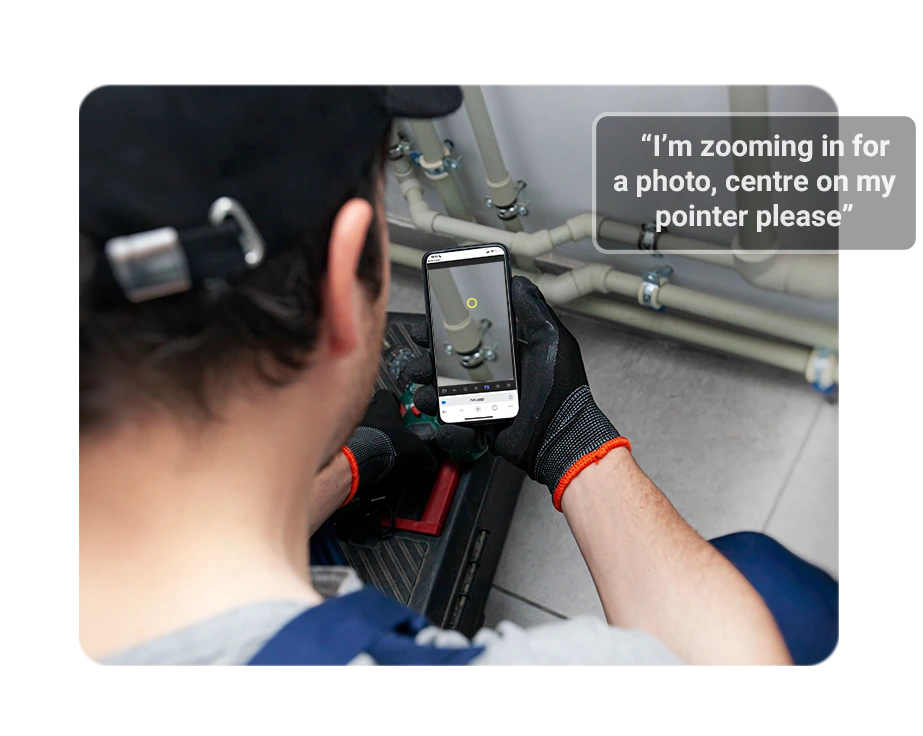
- Live video with annotation, so the agent can mark up the picture and guide the caller to the display, gauge or pipe they need to see.
- OCR, which can capture text in shot, such as a model or serial number on a data plate.
- PDF reports of each session, for the repair record and any written summary.
- Self-survey, so a customer can capture images in their own time when a live call isn’t convenient.
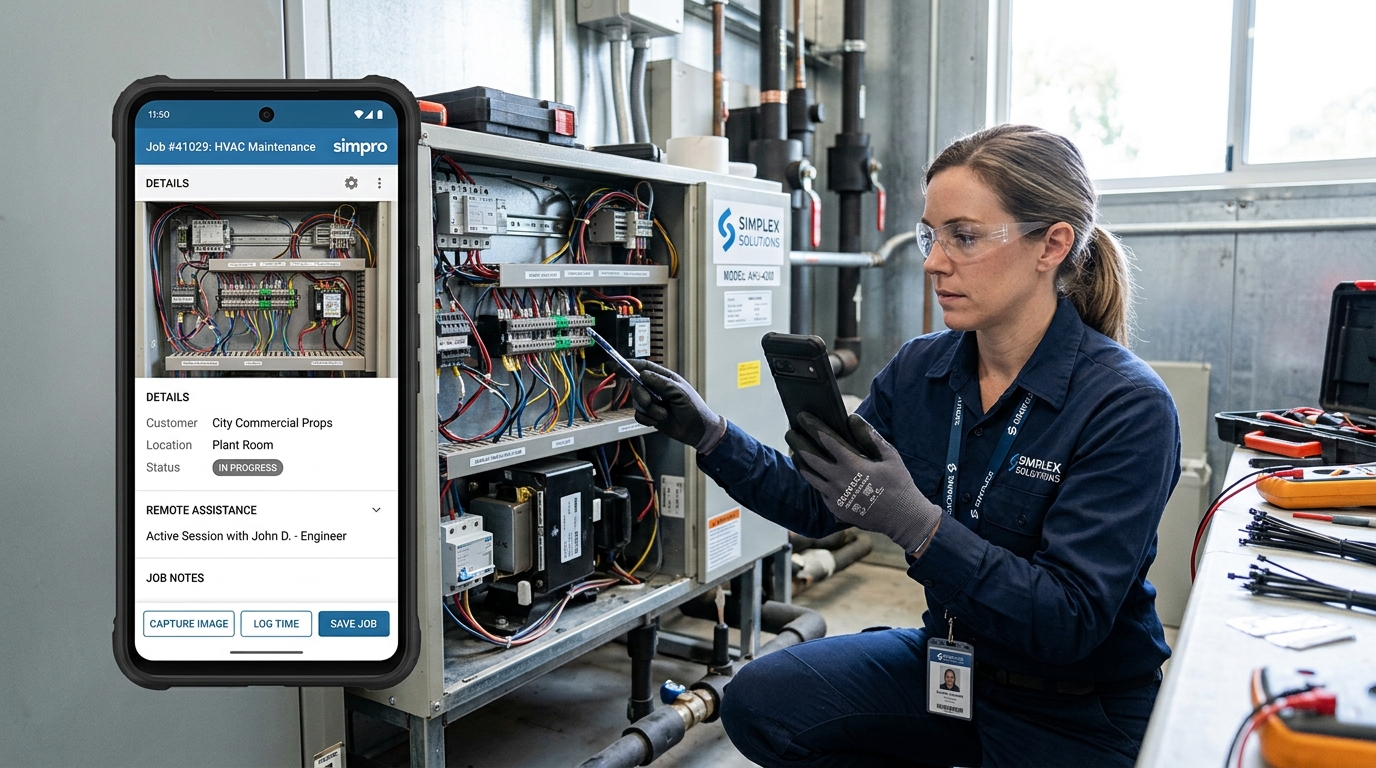
- Simpro integration, listed on the Simpro marketplace, for heating and field service firms already using Simpro.
- Monthly per-user plans.
For anything not listed here — specific integrations with your housing management system, retention settings or roll-out timescales — use the vendor questions above and ask us directly.
Frequently asked questions
Can a heating engineer diagnose a boiler fault over video?
Often, yes — at least to the point of knowing the likely fault category, the parts needed and how urgent the visit is. Fault codes, the pressure gauge, controls and the condensate pipe are all visible on a phone camera. Any work on the gas appliance itself must still be done in person by a Gas Safe registered engineer.
Does a remote video inspection count as an investigation under Awaab’s Law?
GOV.UK’s Phase 2 guidance says standard investigations may be conducted remotely or in person, and that emergency investigations can be conducted remotely. Photos or video may allow a remote investigation. If the tenant explicitly asks for an in-person investigation, the landlord must arrange one.
Is a boiler breakdown an emergency hazard under Awaab’s Law?
It can be. The government’s triage guidance treats a complete loss of heating during a cold period for a vulnerable tenant — for example an older resident, or someone with a heart condition — as an emergency excess cold hazard. Phase 2, which adds excess cold, applies to social landlords in England from 30 November 2026.
What should a tenant check before reporting a broken boiler?
Citizens Advice suggests checking for a power cut, that the boiler’s wall switch is on and that the thermostat is set correctly, then checking the pressure gauge and, in cold weather, whether the condensate pipe has frozen. Tenants shouldn’t try to fix the boiler themselves; the landlord is responsible for the repair.
Do customers need to install an app for a video triage call?
Not with every tool. App-based tools need a download first. With RVX, the customer doesn’t need to download an app.
Sources: English Housing Survey 2024 to 2025, Chapter 2: Energy efficiency (MHCLG, GOV.UK); Awaab’s Law Phase 2: Guidance for social landlords (GOV.UK); Awaab’s Law Phase 2: Guidance to support triaging of hazards (GOV.UK); Check an engineer – are they Gas Safe registered? (HSE); Getting your broken boiler repaired or replaced (Citizens Advice); Video call repair support now available for Accent customers (Accent Group, December 2025).
Want to see how a heating repairs call looks with live video, annotation and a PDF report at the end? Talk to our team about RVX.
Subscribe to newsletter
Want to learn more about how we can help your business grow?
Related Articles
Delve into a rich tapestry of knowledge and inspiration in our blog section. Unleash the potential of your coding journey as we explore industry trends.