AI Voice Agent for a Housing Association Repairs Line (UK)
An AI voice agent on a housing association repairs line answers every call, day or night, takes the repair details, asks safety questions to spot possible emergency hazards, and passes urgent or complex calls to a person with the full context. Under Awaab's Law, that makes the first call a compliance step, not just a customer service one.
What an AI voice agent does on a repairs line
Most repairs calls follow the same pattern. The tenant explains the problem, the call handler confirms who and where they are, asks a few questions about the fault, judges how urgent it is, and logs a job. The judgement in the middle is the hard part. The rest is repetitive, and it is where queues build up on Monday mornings, after storms and during cold snaps.
A voice agent handles that repetitive work in natural conversation rather than through a keypad menu. On a well-designed repairs line it will:
- answer straight away, including evenings, weekends and bank holidays;
- confirm the caller's name, address and contact number;
- ask what the problem is, where it is in the home and how long it has been happening;
- work through a set of safety questions written by your repairs and compliance teams (for example: is there water near electrics, is there a smell of gas, is there no heating and a vulnerable person in the home);
- transfer the call to a person immediately when an answer points to a possible emergency, or when the caller asks for one;
- record a summary and transcript so the person picking up the case does not have to ask the same questions again.
It does not replace your repairs team's judgement. Its job is to make sure no report is lost to an engaged tone or a voicemail box, that every report is captured in the same structured way, and that people spend their time on the calls that need them.
Why repairs lines are under pressure
The numbers from the regulator and the ombudsman show the scale. The Regulator of Social Housing's Tenant Satisfaction Measures for 2024/25 report that large landlords (those with 1,000 or more homes) completed 11 million non-emergency responsive repairs, with 79% finished within their target timescales. The median landlord's satisfaction with the overall repairs service among rented tenants was 73.6%, and satisfaction with the time taken for the most recent repair was 69.5%.
When things go wrong, they increasingly end up with the Housing Ombudsman. Its Annual Complaints Review 2024-25 says property condition is still the most common complaint category, with 5,839 findings, up 43% on 2023-24. It upheld complaints about repairs at the same rate as the previous year, 73%, and noted rising complaints about leaks, damp and mould, and heating and hot water. Over 40% of the compensation it ordered in 2024-25 was for failures in handling leaks, damp and mould.
Many of those complaints start with contact: a tenant who could not get through, a report that was never logged, or a call where nobody asked the question that would have revealed the risk.
Awaab's Law: when the clock starts
Awaab's Law has applied to social landlords in England since 27 October 2025 for all emergency hazards and for damp and mould hazards that present a significant risk of harm. From 30 November 2026, Phase 2 extends it to excess cold, excess heat, falls, structural collapse, fire and explosions, electrical hazards and domestic hygiene. The government says a third phase in 2027 will cover the remaining Housing Health and Safety Rating System hazards apart from overcrowding.
The timescales are strict. For an emergency hazard, the investigation and the safety work must both be completed within 24 hours of the landlord becoming aware of it. For a significant hazard, the landlord must investigate within 10 working days, give the tenant a written summary within 3 working days of the investigation ending, and complete safety work within 5 working days of the investigation.
The guidance also strongly advises landlords to keep clear records of all engagement, investigations and communications with tenants. A voice agent that produces a transcript and a structured summary of every call gives you that record by default, rather than relying on handwritten notes taken under pressure.
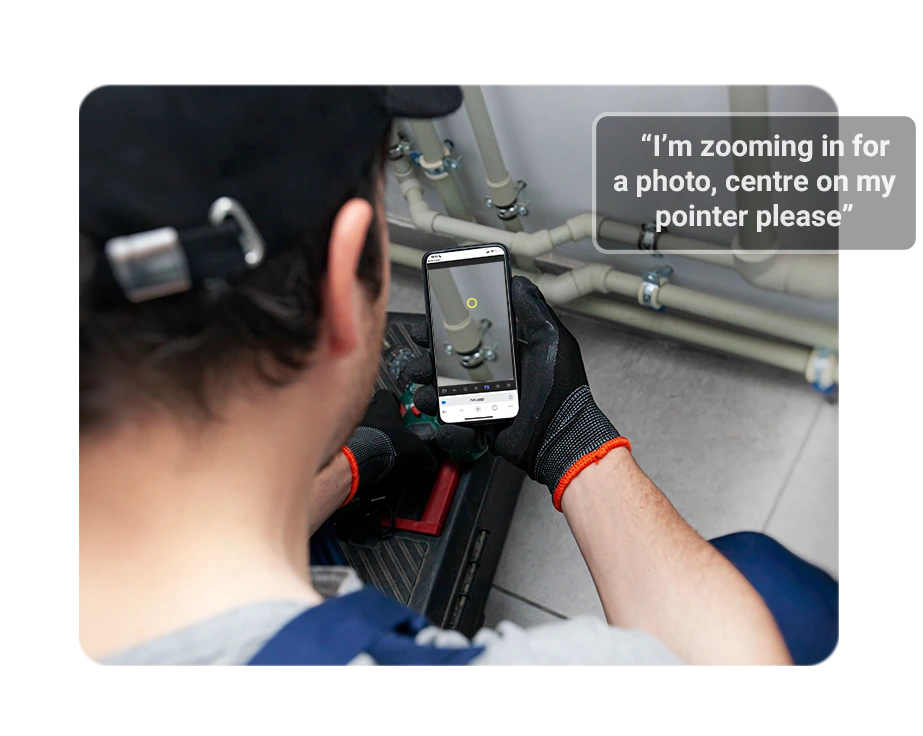
The guidance indicates that some investigations can be carried out remotely, for example using photos or video from the tenant, while tenants can still ask for an in-person inspection. Hostcomm's RVX lets a repairs team see the problem over live video without the tenant downloading an app, which can sit alongside the call as a follow-up step.
What to automate and what to hand to a person
The design question is not "can AI handle repairs calls?" but "which parts of which calls?". A practical split looks like this:
| Call type | Voice agent | Person |
|---|---|---|
| Routine repair (dripping tap, loose handle, door adjustment) | Captures the details and location of the fault; logs the report | Reviews and schedules if not automated |
| Possible emergency (gas smell, flooding, exposed wiring, no heating with a vulnerable resident) | Asks the agreed safety questions, then transfers at once | Takes the call live and starts the 24-hour process |
| Damp and mould report | Records rooms affected, duration, health concerns in the household | Triages risk and arranges investigation within the legal timescales |
| Progress chase ("when is my repair?") | Takes the reference and passes the query to the team | Handles anything disputed or overdue |
| Complaint or distressed caller | Recognises the request and hands over with context | Owns the conversation |
| Out of hours | Answers every call and records it with a timestamp | On-call team receives emergencies immediately |
Two principles keep this safe. First, the safety questions and escalation rules are written and signed off by your own people, not left to the model's discretion. Second, the caller can always reach a person. Hostcomm's Persona hands off to a person with the context of the conversation, so the tenant does not have to start again.
Data, hosting and procurement checks
Repairs calls carry personal data and often sensitive details about health and vulnerability. Before you buy, it is worth being clear about where that data goes.
Persona can run in a UK-sovereign mode, where speech-to-text, the language model, text-to-speech and the database all run in a UK data centre on Hostcomm's OnshoreAI platform, at the same price as the standard service. Hostcomm has provided UK telephony since 2004, is ICO registered, is PCI DSS Level 1 certified (five years running) and is listed on G-Cloud 14, which can simplify procurement for public-sector buyers.
Whichever vendor you assess, ask:
- Where are call audio, transcripts and summaries stored and processed, and which sub-processors are involved?
- Can the agent create or update repairs jobs directly in our housing management system, and which systems does it support today?
- How are the safety and escalation questions configured, who can change them, and is there an audit trail of changes?
- How does the agent recognise vulnerability, distress or a request for a person, and how fast is the transfer?
- What happens to a call if our out-of-hours contractor's line is busy?
- How is each call timestamped and how long are records kept?
- Can we test it on real call scenarios before go-live, and what reporting will we get afterwards?
On cost, Persona voice starts from £99 per month and chat from £29 per month, and the same agent can work across phone calls, web voice, web chat and email. That matters for housing, where many tenants report repairs online or by email as well as by phone, and a single set of questions keeps reports consistent across channels.
A sensible rollout plan
- Map your current calls. Pull a month of call reasons and volumes, including out-of-hours, to see which call types are routine and which need people.
- Write the safety script with your compliance lead. Base the questions on your Awaab's Law policy and your existing emergency repair definitions.
- Start with overflow and out-of-hours. Let the agent take calls that would otherwise wait in a queue or reach voicemail, with emergencies transferred to the on-call team.
- Review transcripts weekly. Check that hazards were identified, escalations happened and tenants were not left frustrated. Adjust the questions.
- Extend to daytime routine repairs. Once the escalation rules are proven, move routine reports to the agent and keep people on the complex calls.
- Tell tenants. Explain the change, how to ask for a person, and the other ways they can report repairs.
Frequently asked questions
Can an AI voice agent decide whether a repair is an emergency?
It should not make the final decision on its own. It should ask the safety questions your team has agreed and transfer the call to a person whenever an answer suggests a possible emergency hazard. The person then takes responsibility for the 24-hour process under Awaab's Law.
Does Awaab's Law apply to housing associations?
Yes. It applies to social landlords in England, including housing associations and councils. Phase 1 began on 27 October 2025 and Phase 2 begins on 30 November 2026.
Will tenants be able to speak to a person?
They should always be able to. A good set-up recognises when a caller asks for a person, is distressed or is reporting something urgent, and hands over with a summary of the call so far.
Can the call data stay in the UK?
With Persona's UK-sovereign mode, speech-to-text, the language model, text-to-speech and the database run in a UK data centre on Hostcomm's OnshoreAI platform. Ask any vendor to set out exactly where each part of the call is processed and stored.
What does an AI voice agent cost compared with extra call handlers?
Persona voice starts from £99 per month. The right comparison depends on your call volumes, opening hours and out-of-hours arrangements, so model it against your own call data rather than a generic figure.
Sources: Awaab's Law Phase 2: guidance for social landlords (GOV.UK, July 2026); Safer homes for 4m tenants with quicker action on dangerous homes (GOV.UK, July 2026); Tenant Satisfaction Measures 2024/25: Headline Report (Regulator of Social Housing); Annual Complaints Review 2024-25 (Housing Ombudsman).
Want to hear how a repairs line could sound with your own safety questions and escalation rules? Talk to our team about Persona.
Subscribe to newsletter
Want to learn more about how we can help your business grow?
Related Articles
Delve into a rich tapestry of knowledge and inspiration in our blog section. Unleash the potential of your coding journey as we explore industry trends.